What Mendoza’s Viewpoints Reveal About Argentina’s Soul
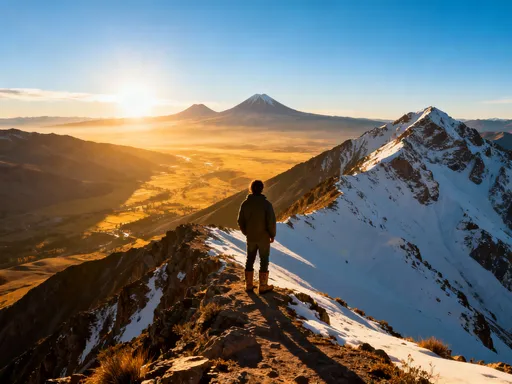
Nestled at the edge of the Andes, Mendoza is more than Argentina’s wine capital—it’s a gateway to breathtaking perspectives, both geographic and cultural. I’ve wandered its sunlit trails, sipped Malbec where the vines stretch endlessly, and stood speechless at viewpoints where mountains vanish into the sky. These aren’t just scenic stops; they’re moments that redefine how you see nature, tradition, and quiet beauty. This is an in-depth journey through Mendoza’s most powerful vantage points—places that don’t just offer views, but revelations. Each elevation gain brings not only thinner air but deeper understanding: of time, of resilience, of a land shaped by fire, ice, and devotion. In Mendoza, the horizon does not simply mark the edge of sight—it invites reflection.
Arrival in Mendoza: First Impressions Beyond the Vineyards
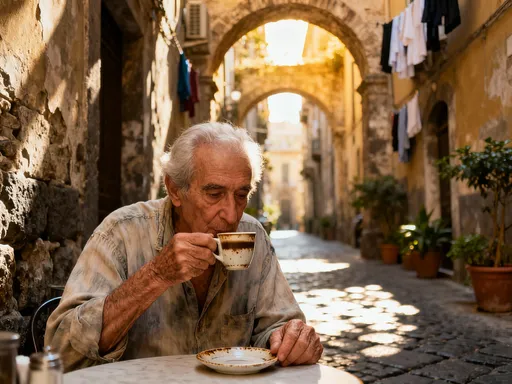
Stepping into Mendoza city feels like entering a sanctuary carved between desert and mountain. The air is dry and clear, carrying the faint scent of eucalyptus from wide, tree-lined avenues that shade quiet plazas and family-run cafes. Unlike the bustling energy of Buenos Aires, Mendoza moves at a slower, more deliberate pace—one that encourages lingering over coffee and long conversations under the afternoon sun. The city’s rhythm mirrors its geography: grounded, sun-drenched, and deeply connected to the land. Even before venturing into the wilderness, the presence of the Andes looms in the west, a constant silhouette that grows more commanding with each passing hour.
What surprises first-time visitors is how quickly the urban landscape transitions into open space. Within minutes of leaving the city center, orchards and vineyards unfold like a patchwork quilt across the arid soil. This proximity to nature is no accident. Mendoza was rebuilt after the devastating 1861 earthquake with wide streets and an intricate network of irrigation canals, designed not only for safety but to harmonize with the environment. These canals, known as *acequias*, channel glacial meltwater from the Andes, transforming what could be barren land into a fertile oasis. The city does not resist its harsh climate—it adapts to it, thrives within it.
Altitude plays a quiet but powerful role in shaping both the landscape and the traveler’s experience. At about 750 meters (2,460 feet) above sea level, Mendoza sits high enough for crisp, clean air and intense sunlight, yet low enough to avoid the dizziness that comes at higher elevations. This gentle introduction to altitude prepares visitors for the climbs ahead, offering a gradual acclimatization. The sun here feels more direct, the shadows sharper, the colors more vivid—conditions that enhance every outdoor moment. Whether walking through Parque General San Martín or enjoying an evening empanada on a sidewalk terrace, the sense of being at the edge of something vast is ever-present.
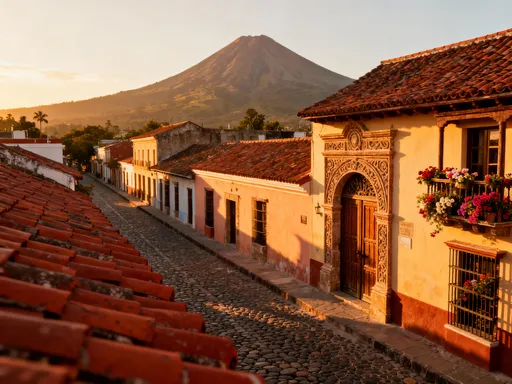
The city’s architecture, too, reflects this balance between resilience and beauty. Adobe walls, red-tiled roofs, and shaded patios speak to a Spanish colonial heritage adapted to the local climate. Modern touches blend seamlessly, with sustainable design increasingly evident in public spaces and hotels. Mendoza does not cling to nostalgia; it evolves while honoring its roots. As the sun sets behind the Andes, painting the sky in streaks of orange and violet, one begins to understand: this city is not just a starting point for adventure—it is a statement of harmony between human life and natural force.
Cerro de los Siete Colores: A Palette Forged by Time
Just beyond the Uspallata Valley, along the historic route toward the Chilean border, rises a geological wonder that defies expectation: Cerro de los Siete Colores. Though less famous than its namesake in Salta, this Mendoza formation captivates with its layered bands of red, ochre, lavender, and deep green, painted across the hillside by millennia of tectonic pressure and mineral deposition. From a distance, it looks almost artificial—a surrealist canvas stretched across the desert. Up close, the colors reveal their true origin: a chronicle of Earth’s slow, relentless transformation.
The hill’s vivid stratification results from ancient sedimentary layers compressed and tilted by the collision of the Nazca and South American tectonic plates. Iron oxides lend the reds and rusts, while volcanic ash and copper minerals contribute to the cooler tones. Erosion has stripped away the surface, exposing these layers like the pages of a buried book. Standing before it, one gains a rare sense of geological time—not as an abstract concept, but as a visible, tangible force. Each hue represents a different era, a different climate, a different chapter in the region’s deep history.
Reaching the base of the hill requires a moderate hike, typically beginning from a small roadside pull-off along Route 7. The trail is well-marked but unpaved, winding through sparse shrubland and rocky terrain. At approximately 2,400 meters (7,870 feet), the altitude makes the climb slightly more demanding, but the air remains breathable and the pace manageable for most travelers. Along the way, guides often share stories of the indigenous Huarpe people, who once inhabited this region and viewed such formations as sacred. Their presence, though no longer visible, lingers in the quiet reverence the landscape inspires.
The best moment comes at sunrise, when the low-angle light sweeps across the slopes, setting each layer ablaze in shifting tones. One minute, the hill glows amber; the next, it deepens into crimson. Photographers and travelers alike pause in silence, aware they are witnessing a fleeting alchemy of light and mineral. This is not a spectacle designed for crowds—it is an intimate exchange between observer and earth. The experience reminds us that beauty often arises from conflict: the violent birth of mountains, the slow grinding of continents, the patient work of wind and water. In Mendoza, even the ground beneath your feet tells a story of endurance.
Puente del Inca: Where History and Nature Balance on a Cliff
Perched dramatically above the Las Cuevas River, the Puente del Inca is a natural arch carved by time, water, and mineral deposits. Spanning about 45 meters across and rising nearly 30 meters above the gorge, this bridge was once a crucial crossing for travelers moving between Argentina and Chile. Long before modern highways, it served as a vital link along the Inca road system and later for Spanish colonists and 19th-century explorers. Today, it stands as both a geological marvel and a monument to human perseverance, framed by the stark grandeur of the Andes.
The bridge’s formation began with the river’s persistent flow, cutting through soft rock over thousands of years. As water cascaded down the mountainside, it carried dissolved minerals—particularly calcium carbonate—which gradually solidified along the cliff edges, reinforcing the arch. This process, known as travertine deposition, created a structure strong enough to support foot traffic and, at times, pack animals. The bridge’s delicate pinkish hue comes from iron oxide in the mineral deposits, giving it an almost otherworldly appearance against the gray stone of the surrounding cliffs.
Visitors approach via a short but steep path from the nearby historic hotel ruins, remnants of a once-luxurious health resort built in the early 1900s to capitalize on the area’s therapeutic hot springs. Though the hotel was abandoned after a landslide in the 1940s, its crumbling façade adds to the site’s aura of timelessness. From the viewing platform, the panorama stretches far into the Aconcagua Valley, where snow-capped peaks pierce the sky and glacial streams weave through narrow ravines. On clear days, the silhouette of Aconcagua—the highest peak in the Americas at 6,961 meters—dominates the horizon, a silent guardian of the pass.
The elevation here, over 2,700 meters (8,850 feet), adds a sense of solemnity to the experience. The air is thinner, the silence deeper. As you stand overlooking the bridge, it is easy to imagine the countless travelers who crossed it: Inca messengers, Spanish missionaries, mountaineers en route to Aconcagua, and engineers constructing the trans-Andean railway. Each left no trace, yet their collective journey is embedded in the landscape. Puente del Inca is not merely a natural formation—it is a threshold, a place where geography and history converge.
Mirador del Cristo Redentor: Faith, Engineering, and Epic Vistas
At over 3,800 meters (12,500 feet), the Mirador del Cristo Redentor offers one of the most awe-inspiring viewpoints in the Andes. Here, a 7-meter-tall bronze statue of Christ stands with arms outstretched, not over Rio de Janeiro, but over the continental divide, facing Argentina with quiet benediction. Erected in 1904 as a symbol of peace between Argentina and Chile, the statue has since become a pilgrimage site for travelers seeking both spiritual reflection and unparalleled mountain scenery. Reaching it is no small feat—most visitors take a combination of road and footpath, acclimatizing carefully as the air grows thinner.
The journey itself is part of the revelation. As the road climbs through the Las Cuevas Valley, the vegetation thins, the rocks grow larger, and the sky deepens into an intense blue. Along the way, remnants of the old trans-Andean railway appear—rusting tracks, stone tunnels, and iron bridges suspended over chasms. Built in the early 20th century, this engineering marvel was intended to connect the Atlantic and Pacific coasts by rail. Though it ceased regular operations in the 1980s due to avalanche risks, its remains stand as a testament to human ambition in the face of extreme terrain.
From the mirador, the view is nothing short of majestic. To the west, the Chilean Andes unfold in a series of jagged peaks and glacial valleys. To the east, the Argentine slopes descend into high-altitude steppe, dotted with hardy shrubs and wild vicuñas. On clear days, the ice fields shimmer under the sun, and the silence is so complete it feels sacred. The statue, though man-made, does not dominate the landscape—it complements it, a small gesture of faith in the midst of overwhelming natural power.
Many visitors leave small tokens at the base of the statue—notes, rosaries, photographs—personal offerings left in moments of gratitude or prayer. Whether one is religious or not, the site evokes a sense of humility. It is not just the height or the cold that moves people; it is the realization of how small humanity is in the face of such grandeur. The Mirador del Cristo Redentor does not shout its significance. It waits, in stillness, for those willing to climb, to breathe deeply, and to look.
Laguna de Diamante: A High-Altitude Wonder Among Volcanoes
Deep in the Andes, near the towering stratovolcano Tupungato, lies Laguna de Diamante—a turquoise jewel cradled by volcanic ridges and ancient rock formations. At approximately 3,200 meters (10,500 feet), the lake is accessible only by guided trek or 4x4 excursion, preserving its pristine condition and fragile ecosystem. Its name, meaning “Diamond Lake,” comes from the way sunlight sparkles on its surface, creating a dazzling effect against the dark volcanic sand. The water itself is fed by glacial melt, filtered through layers of rock and ash, giving it an almost surreal clarity.
The trek to the lagoon is a journey through changing worlds. Starting from the Uco Valley, the landscape shifts from vineyards to high desert, then to rocky alpine terrain. Along the way, evidence of past volcanic activity is everywhere: basalt columns, ash fields, and the occasional sulfur vent releasing faint wisps of steam. The air grows cooler, the wind stronger. Yet, for those prepared, the effort is rewarded with a scene of profound serenity. The lake lies in a natural basin, surrounded by peaks that rise sharply into the sky, their slopes still holding patches of snow even in summer.
What makes Laguna de Diamante truly special is not just its beauty, but its solitude. Unlike more accessible tourist spots, this area sees few visitors, allowing nature to remain undisturbed. Birds of prey circle overhead, and the only sounds are the wind and the occasional crack of distant ice. Conservation efforts are in place to protect the site from overuse, with strict guidelines on waste, campfires, and off-road driving. These measures ensure that future generations can experience the same unspoiled wonder.
Standing at the water’s edge, one is struck by the contrast: the vibrant blue of the lake against the monochrome of the volcanic landscape, the stillness of the surface mirroring the chaos of its geological origins. It is a place that invites contemplation. The scale is immense, yet the moment feels intimate. Here, high above the world, time seems to slow. The lake does not merely reflect the sky—it holds a piece of it, preserved in liquid light.
Viewpoints Within the Winelands: Elevated Tastes in the Uco Valley
While Mendoza’s mountain vistas dominate the imagination, its elevated vineyards offer a different kind of revelation—one where nature, agriculture, and aesthetics converge. In the Uco Valley, particularly in sub-regions like Gualtallary, vineyards climb to altitudes of over 1,300 meters (4,265 feet), where cooler temperatures and intense sunlight produce some of Argentina’s most refined Malbecs. But beyond the wine itself, these estates have embraced the art of the viewpoint, designing terraces, observation decks, and open-air tasting rooms that frame the Andes like living paintings.
Wineries such as Salentein, Bodega Catena Zapata, and Atamisque have transformed their spaces into experiences of both taste and vision. At Salentein’s Parque Andino, a wine museum built into the hillside offers panoramic views of the valley while educating visitors on the region’s viticultural history. At Catena Zapata’s Adrianna Vineyard, a simple wooden deck overlooks rows of vines stretching toward the mountains, where the interplay of light and shadow shifts throughout the day. These are not mere backdrops—they are integral to understanding *terroir*, the idea that a wine’s character is shaped by its environment.
Tasting Malbec at such altitudes is a multisensory experience. The wine, often deeper in color and more structured than its lowland counterparts, carries notes of dark fruit, violet, and mineral—flavors that echo the rocky soil and crisp air. Sipping it while gazing at the peaks that feed the irrigation canals below creates a powerful connection: every element, from grape to glass, is shaped by elevation. The silence between sips, the warmth of the sun, the distant line of the Andes—all contribute to a moment of completeness.
These elevated tastings do more than showcase wine; they redefine luxury. It is not found in opulence, but in presence. In the ability to stand still, to breathe, to see how land and labor come together to create something extraordinary. The Uco Valley does not rush. It grows, it ripens, it reveals—just like the viewpoints that surround it.
Why Mendoza’s Viewpoints Change How You Travel
Mendoza’s viewpoints do more than offer beautiful photographs—they recalibrate the way we experience travel. In an age of constant movement and digital distraction, these high-altitude moments demand presence. They ask us to slow down, to breathe deeply, to look not just at the landscape, but into it. Each mirador, each trail, each silent lake is an invitation to witness time, geology, and human effort written into the earth. They teach us that beauty is not always loud or immediate; sometimes, it unfolds gradually, like the rise of the sun over a colored hill.
What sets Mendoza apart is its quiet dignity. It does not rely on spectacle or crowds to prove its worth. Its power lies in subtlety—in the way light changes on a vineyard at dusk, in the sound of wind over a high pass, in the stillness of a lake surrounded by volcanoes. Traveling here encourages a different rhythm: one of intention, of respect, of observation. It shifts the goal from seeing everything to seeing deeply.
Moreover, these viewpoints foster a deeper connection to Argentina’s soul. They reveal a country shaped by extremes—heat and cold, desert and glacier, isolation and community. They honor the labor of vintners, the resilience of ancient peoples, the ambition of engineers, and the silence of the mountains. To stand in Mendoza is to stand at the intersection of nature and culture, where every horizon tells a story.
Ultimately, Mendoza does not shout its beauty. It reveals it, one high-altitude moment at a time. And in doing so, it changes not just how we see a place, but how we see ourselves within it. The mountains do not care for our schedules or our cameras. They simply are. And in their presence, we learn to be, too. For the traveler willing to climb, to wait, to listen, Mendoza offers not just views—but vision.