Hiking Through Lisbon’s Hidden Hills: Where City Districts Come Alive
You know that feeling when you think you’ve seen a city, but then you lace up your boots and suddenly discover it’s got secrets everywhere? That’s Lisbon. I hit the trails between its colorful districts and was blown away—each step revealed stunning views, unexpected history, and a side of the city most tourists never see. Hiking here isn’t just exercise—it’s the best way to truly feel Lisbon’s soul. As the morning light spills over terracotta rooftops and the scent of fresh bread drifts from corner bakeries, walking these hills becomes more than movement; it becomes a conversation with the city itself. Every cobblestone path, every quiet courtyard, tells a story only those on foot have time to hear.
Why Hiking Is the Ultimate Way to Explore Lisbon
Lisbon is not a city best seen from the back of a taxi or a crowded tram. While these modes of transport offer convenience, they glide over the surface without truly engaging with the city’s essence. Hiking, on the other hand, invites travelers to move at a human pace—slow enough to absorb details, yet active enough to cover ground and gain elevation. The city was built on seven hills, a fact that shapes everything from its architecture to its daily rhythms. When you walk uphill through its winding streets, you’re not just exercising; you’re retracing the paths locals have taken for generations, feeling the same inclines that once challenged horse-drawn carts and now test modern sneakers.
What sets hiking apart is the depth of immersion it provides. Unlike guided tours that follow fixed itineraries, walking allows for spontaneity—turning down an alley because of the sound of fado music, pausing at a tiny café where old men play checkers, or stopping to admire a tiled staircase hidden between buildings. These unplanned moments form the emotional core of travel, creating memories far more vivid than any photo. Movement on foot synchronizes your body and mind with the city’s pulse, helping you sense its moods—the quiet mornings in residential neighborhoods, the midday buzz of market squares, the golden hush that falls over viewpoints at sunset.
Additionally, hiking offers a unique geographical education. Each ascent rewards you with panoramic views that help orient you within the city’s layout. From the top of a hill, you can see how the districts unfold—Alfama’s red rooftops cascading toward the river, Bairro Alto’s grid of streets climbing upward, and the wide expanse of the Tagus shimmering in the distance. This spatial awareness transforms Lisbon from a collection of attractions into a coherent, living organism. You begin to understand not just where things are, but why they are there—how history, trade, and topography shaped the city’s development. That understanding is something no audio guide can fully convey.
Moreover, walking fosters meaningful connections with locals. When you’re on foot, especially in quieter residential zones, you’re more likely to exchange greetings, receive directions, or be invited into a brief conversation. Shopkeepers notice regular walkers; neighbors nod as you pass. This subtle reciprocity builds a sense of belonging, even if temporary. Hiking through Lisbon isn’t just about seeing the city—it’s about being seen by it, becoming part of its daily life, even if only for a few hours. In this way, the act of walking becomes a quiet form of respect, a way of saying, “I’m here, and I’m paying attention.”
Alfama to Graça: A Historic Climb with Panoramic Payoffs
One of the most rewarding urban hikes in Lisbon begins in Alfama, the city’s oldest surviving neighborhood, and ascends to the elevated district of Graça. This route is not merely a walk—it’s a journey through centuries of history, culture, and resilience. Alfama survived the devastating 1755 earthquake that reshaped much of Lisbon, and its maze of narrow, winding streets still echoes with the past. As you step into this district, the modern world fades. The air carries the scent of grilled sardines, jasmine from courtyard gardens, and the faint saltiness of the nearby river. The sound of a distant guitar and mournful fado vocals drift from open windows, wrapping the streets in a melancholic yet comforting soundtrack.
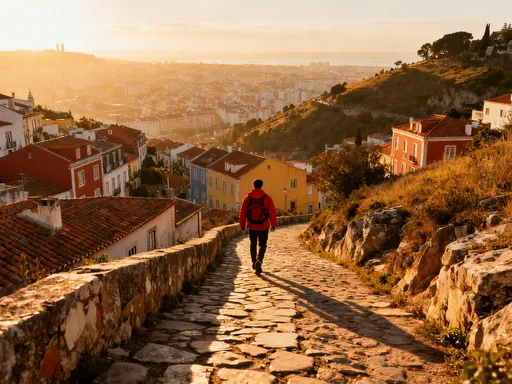
The climb begins subtly, following Rua dos Remédios, one of Alfama’s main arteries. The path winds upward, flanked by pastel-colored houses adorned with laundry lines and flower-filled balconies. Stone steps appear intermittently, some worn smooth by centuries of foot traffic. Along the way, you’ll pass small chapels, family-run tascas (taverns), and elderly residents sitting on wooden chairs, watching the world go by. This is not a tourist spectacle—it’s real life unfolding at a gentle pace. As you climb, the views gradually open up behind you, revealing layers of terracotta roofs and the distant spires of São Jorge Castle perched on the hilltop.
Reaching Graça feels like arriving at a quiet sanctuary above the city’s bustle. The neighborhood is known for its relaxed atmosphere and two of Lisbon’s most beloved viewpoints: Miradouro da Senhora do Monte and Miradouro da Graça. The former, located at the highest natural point in central Lisbon, offers one of the most breathtaking panoramas in the city. On a clear day, you can see across the Tagus River to the Cristo Rei statue on the south bank, while the 25 de Abril Bridge stretches like a silver ribbon below. Unlike more commercialized miradouros, this one remains relatively untouched by mass tourism, especially in the early morning or late afternoon when only a few photographers and couples linger.
What makes this hike special is the contrast it offers—starting in the dense, intimate streets of Alfama and emerging into the open skies of Graça. It’s a physical and emotional ascent, mirroring the way travel itself can lift the spirit. Along the way, you’re not just observing history; you’re moving through it. The climb demands effort, but the reward is more than a view—it’s a sense of accomplishment, a deeper connection to the city, and a memory etched not just in the mind, but in the muscles of your legs and the rhythm of your breath.
From Bairro Alto to Estrela: Green Paths in the Urban Jungle
For travelers seeking a balance between urban energy and natural serenity, the hike from Bairro Alto to Estrela offers a perfect blend. Bairro Alto, known for its vibrant nightlife and lively terraces, transforms in the early hours into a peaceful, almost residential neighborhood. This route begins just as the city wakes, when the echoes of last night’s music have faded and the first rays of sunlight illuminate the wrought-iron balconies. The path heads southwest, descending gently from the higher elevations of Bairro Alto toward the quieter, more refined district of Estrela.
What sets this trail apart is its greenery. Unlike many city walks that consist entirely of pavement, this route follows tree-lined avenues, passes small parks, and skirts the edge of the Jardim Botânico da Universidade de Lisboa. The botanical garden, though not always open to the public, offers a lush green backdrop, its tall palms and tropical plants spilling over the walls. The air here feels cooler, fresher, carrying the scent of damp earth and blooming jasmine. For a city that can feel intensely urban, this stretch provides a refreshing reminder of nature’s presence.
As you walk, the architecture shifts subtly. Bairro Alto’s colorful, slightly weathered facades give way to Estrela’s neoclassical elegance. The centerpiece is the Basílica da Estrela, a pristine white church with a soft pink dome, surrounded by a peaceful square where children play and locals walk their dogs. The contrast between the two districts is striking—Bairro Alto pulses with creative energy, while Estrela exudes calm and order. Walking between them allows you to experience both without the jarring transition of a metro ride or taxi.
This route is ideal for travelers who want to explore without exhaustion. The elevation changes are gentle, the sidewalks wide, and the pace unhurried. Along the way, you’ll pass small cafes opening for breakfast, florists arranging bouquets, and bookstalls setting up on the corners. It’s a walk that invites mindfulness, encouraging you to notice the details—the pattern of tiles on a doorstep, the way sunlight filters through a canopy of leaves, the sound of a fountain in a hidden courtyard. In a world that often moves too fast, this hike offers a rare opportunity to slow down and simply be present.
São Vicente to Belém: Following the Tagus River Trail
For those seeking a longer, more expansive hike, the route from São Vicente de Fora to Belém offers a scenic journey along the Tagus River. This path combines history, nature, and urban exploration, stretching approximately 8 kilometers from the historic hilltop monastery to the cultural landmarks of western Lisbon. While not entirely off-road, the trail follows riverside promenades, quiet residential streets, and dedicated walking paths that keep you close to the water for much of the journey.
The starting point, the Monastery of São Vicente de Fora, is a masterpiece of Baroque architecture and a symbol of Lisbon’s religious heritage. From here, the path descends gradually toward the riverfront, offering glimpses of the water between buildings. As you approach the river, the air becomes cooler, carrying the faint briny scent of the Atlantic. The trail follows the northern bank of the Tagus, passing under the shadow of the 25 de Abril Bridge and alongside the modern architecture of the Padrão dos Descobrimentos—a monument celebrating Portugal’s Age of Exploration.
Walking this route, you’re tracing the historical lifeline of Lisbon. The Tagus has been central to the city’s identity for centuries, serving as a gateway for explorers, traders, and immigrants. As you walk, you’ll see remnants of that legacy—the Jerónimos Monastery, where Vasco da Gama once prayed before his voyage to India; the Belém Tower, a fortified gateway to the city; and the MAAT Museum, a modern addition that reflects Lisbon’s ongoing evolution. These landmarks aren’t just seen from a distance; they’re experienced in context, connected by the rhythm of your footsteps.
One of the greatest advantages of this hike is its accessibility. Unlike the steep climbs of central Lisbon, this route is mostly flat, making it suitable for all fitness levels. The riverside paths are well-maintained, shaded in parts, and lined with benches and water fountains. Cyclists and joggers share the space, creating a lively yet peaceful atmosphere. Along the way, you’ll pass cafes and gelaterias, perfect for a mid-route break. The journey ends in Belém, where you can reward yourself with a pastel de nata from the original Pastéis de Belém bakery—a creamy, cinnamon-dusted custard tart that has been made from a secret recipe since 1837.
This hike is more than a sightseeing tour—it’s a narrative in motion, telling the story of Lisbon from its spiritual roots to its maritime glory and modern reinvention. By walking it, you don’t just visit these places; you understand their relationship to one another and to the river that binds them.
Practical Tips for Hiking Lisbon’s Districts Like a Local
To fully enjoy Lisbon’s urban trails, preparation is key. The city’s hills are beautiful but demanding, and the cobblestone streets can be slippery, especially when wet. Footwear is the most important consideration—choose sturdy walking shoes with good grip. Avoid smooth-soled dress shoes or flip-flops, which offer little support and can be dangerous on steep, uneven surfaces. Breathable materials help manage sweat, particularly during warmer months when temperatures rise and the sun beats down on stone surfaces.
Timing matters. The best hours for hiking are early morning, between 7:00 and 9:00 a.m., or late afternoon, after 4:00 p.m. Midday sun can be intense, especially in summer, and many popular viewpoints become crowded with tour groups. Walking in the cooler hours not only makes the experience more comfortable but also increases your chances of encountering local life—bakers pulling fresh bread from ovens, delivery trucks unloading goods, and schoolchildren walking to class.
Hydration is essential. Carry a reusable water bottle and refill it at public fountains, which are scattered throughout the city. Many parks and squares have drinking fountains marked with a “Água Potável” sign, indicating safe, drinkable water. Avoid relying solely on cafes for water, as some may charge for tap water or discourage non-customers from using their restrooms.
Navigation is easier with the help of smartphone apps. Google Maps and Maps.me offer reliable walking routes, including elevation profiles that help you anticipate steep climbs. For a more specialized experience, AllTrails lists urban hikes in Lisbon with user reviews and photos. Always download offline maps in case your signal weakens in narrow alleys or underground passages.
Respect for local neighborhoods is crucial. Many hiking routes pass through residential areas where people live and work. Keep noise to a minimum, avoid blocking doorways or staircases, and never enter private property. If you’re taking photos, be mindful of people’s privacy—ask permission before photographing individuals, especially the elderly or children. Remember, you’re a guest in their home.
Lastly, consider using public transportation to reach trailheads. Lisbon’s metro, buses, and historic trams can get you close to starting points without tiring you out before the hike begins. The tram 28, for example, runs through many historic districts and can drop you near Alfama or Graça. This hybrid approach—using transit to access trails—maximizes your energy for the walk itself.
Hidden Details You’ll Only Notice on Foot
When you walk through Lisbon, the city reveals itself in fragments—small, fleeting moments that collectively form a deeper understanding. These details are invisible from a moving vehicle or a crowded tour bus. They appear only to those who move slowly, who pause, who look down as well as up. In a stairwell between two houses, you might notice a wall covered in azulejos—hand-painted blue tiles depicting scenes of fishing villages or historical events. These tiles are not just decoration; they are archives of memory, telling stories passed down through generations.
Look closely at the cobblestones—calçada portuguesa—and you’ll see patterns forming waves, shields, and geometric designs. In some areas, wild herbs like rosemary and thyme grow in the cracks, releasing their scent when stepped on. These plants are not cultivated; they are survivors, thriving in the harsh urban environment. Their presence is a quiet testament to nature’s resilience.
Street art appears in unexpected corners—murals honoring local heroes, whimsical animals peeking from alley walls, or political messages painted in bold colors. Unlike gallery art, this is raw and immediate, often created in response to current events. Some pieces are temporary, washed away by rain or painted over, making each sighting feel like a gift.
Then there are the people—the woman watering geraniums on her third-floor balcony, the man repairing a bicycle in his garage, the cat napping in a sunlit doorway. These moments of ordinary life are the soul of the city. They don’t appear in brochures, but they stay with you. Walking allows you to witness them, to feel their rhythm, to become part of the quiet hum of daily existence. In a world increasingly dominated by speed and spectacle, these micro-moments offer a rare kind of truth—one that can only be found on foot.
Why This Experience Changes How You See Cities Forever
Hiking through Lisbon does more than show you a new side of the city—it changes the way you travel. Once you’ve walked its hills, felt its textures, and earned its views, you can no longer be satisfied with passive observation. You begin to seek out cities that invite exploration on foot, that reward curiosity and effort. You learn to appreciate the value of slowness, of presence, of physical engagement with place.
This shift is profound. It moves travel from consumption to connection. Instead of checking off landmarks, you start building relationships—with streets, with neighborhoods, with people. You understand that a city is not a static display but a living, breathing entity shaped by history, geography, and human effort. You see the beauty in imperfection—the cracked tiles, the peeling paint, the uneven steps—and recognize them as signs of authenticity.
Lisbon, with its hills and hidden corners, is the perfect teacher. It doesn’t make walking easy, but it makes it meaningful. Every climb offers a reward; every turn reveals a surprise. And when you finally stand at a miradouro, catching your breath as the sun dips below the horizon, you realize something simple yet powerful: you didn’t just visit Lisbon. You lived it. And once you’ve experienced a city that way, there’s no going back to the sidelines. The world becomes bigger, richer, and more alive—one step at a time.